

Sarawak Says Air Borneo, New International Airport and MICE Expansion Will Drive Global Tourism Growth

Published
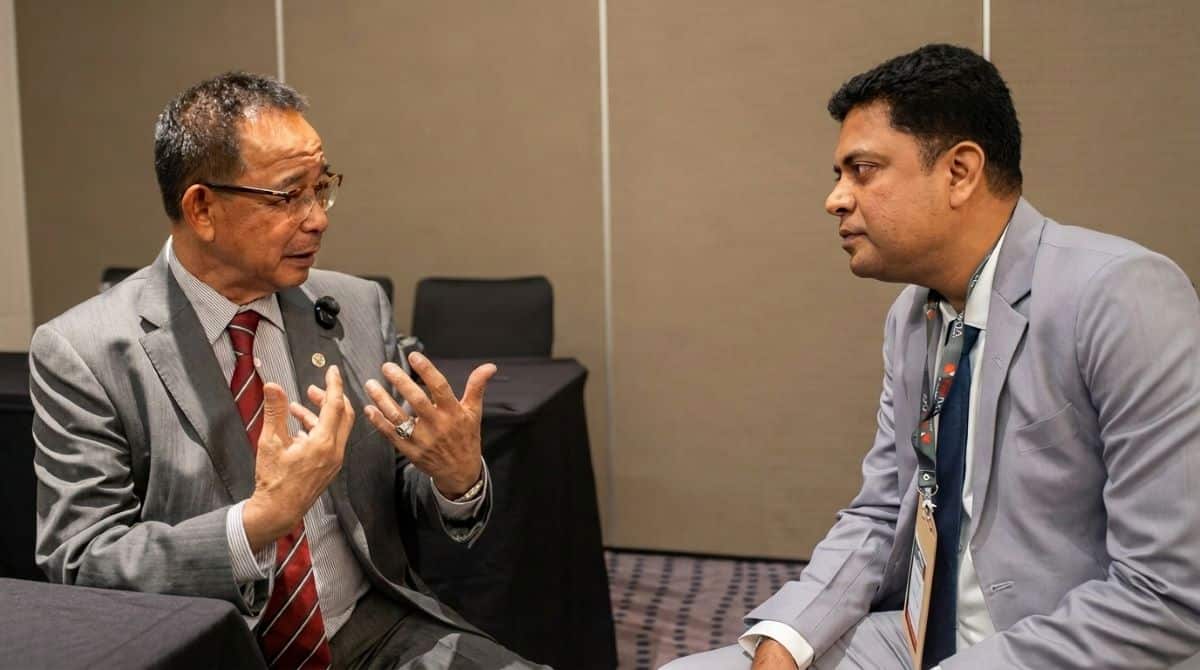
Sarawak is placing aviation connectivity, international events and major MICE infrastructure at the centre of its long-term tourism strategy as the Malaysian state looks to strengthen its position in global travel. Speaking exclusively to Vijay Kumar, Senior Editorial Manager at Travel and Tour World, reporting from PATA Travel Mart 2026, held from August 18 to 20 in Kuching, Sarawak, Malaysia, Dato Sri ABD Karim Rahman Hamzah, Sarawak’s Minister of Tourism, Creative Industry, Performing Arts, Youth, Sports & Entrepreneur Development, outlined how Air Borneo, a new international airport, wider international air links, business events, nature tourism and technology are expected to support Sarawak’s next phase of tourism growth.
During the exclusive interview with Vijay Kumar, Senior Editorial Manager at Travel and Tour World, Dato Sri ABD Karim Rahman Hamzah discussed Sarawak’s ambition to improve international accessibility, develop Kuching into a stronger aviation hub, expand links with India, the Middle East and major Asian markets, strengthen MICE tourism, attract large international events and ensure tourism contributes more directly to the prosperity of local communities.
Advertisement
Advertisement
Air Borneo Becomes Central to Sarawak’s Global Tourism Connectivity Strategy
One of the strongest messages from the interview was Sarawak’s decision to take greater control of its aviation connectivity through Air Borneo.
Dato Sri ABD Karim Rahman Hamzah said Sarawak established its own airline in 2026 as part of a wider effort to improve connections with the outside world.
Advertisement
Advertisement
Air access carries particular importance for Sarawak because of its geographical position on Borneo.
The minister explained that flying remains the most practical way of connecting Sarawak with other markets.
Advertisement
Advertisement
By developing a state-owned airline, Sarawak expects to gain greater flexibility in determining where and how it establishes air connections, making aviation a central component of its future tourism strategy.
New International Airport Will Support Sarawak’s Global Aviation Ambition
Airport infrastructure represents another major part of Sarawak’s long-term connectivity strategy.
Dato Sri ABD Karim Rahman Hamzah said Sarawak is developing a new international airport as it prepares for higher levels of international connectivity in the years ahead.
Under the vision described during the interview, the existing Kuching International Airport could eventually take on a more domestic role once the larger international facility is operational.
The airport strategy demonstrates that Sarawak is looking beyond individual flight additions.
Instead, the state is preparing infrastructure that can support wider aviation expansion, growing visitor flows and stronger international access.
Advertisement
Advertisement
For tourism, increased airport capacity could become an important foundation for Sarawak’s ambition to compete for more international travellers.
Kuching Could Develop into a Major Aviation Hub Within Three Years
Kuching sits at the centre of Sarawak’s aviation ambitions.
Dato Sri ABD Karim Rahman Hamzah said the state is giving itself approximately three years to develop Kuching into a hub capable of supporting much wider international connectivity.
That ambition is closely connected with the development of Air Borneo and the proposed new airport infrastructure.
Building a hub would give Sarawak greater ability to connect travellers directly with the state rather than depending entirely on gateways elsewhere.
For international tourism, direct accessibility can influence how easily destinations enter traveller itineraries.
Advertisement
Advertisement
Sarawak’s strategy therefore combines an airline, airport development and route expansion into a broader plan to strengthen Kuching’s role within regional and international aviation.
India, Middle East and Major Asian Markets Form Part of Air Borneo’s Vision
International route development is expected to become one of the most important elements of Sarawak’s aviation strategy.
Dato Sri ABD Karim Rahman Hamzah identified the Middle East, India, Indochina, Bangkok, Hong Kong, South Korea and Japan among the markets Sarawak wants to connect with as its aviation plans develop.
The range of destinations demonstrates an ambition to widen Sarawak’s tourism reach across several important international travel regions.
Greater connectivity could help the state address leisure tourism, business travel and event-driven demand at the same time.
Rather than concentrating entirely on nearby visitor markets, the vision outlined during the interview points towards a broader international network capable of bringing Sarawak closer to major Asian and long-haul travel markets.
Advertisement
Advertisement
Tourism Is Seen as a Way to Spread Economic Benefits Across Sarawak
Tourism forms part of a much wider economic strategy for Sarawak.
Dato Sri ABD Karim Rahman Hamzah described the state as rich in resources including gas, oil and methanol, while also highlighting its growing focus on green energy and hydrogen.
He said Sarawak had reached high-income-state status earlier than originally targeted, according to the recognition he referenced during the interview.
However, the minister emphasised that economic strength at state level must also translate into better living standards for the wider population.
Tourism and hospitality therefore have an important social and economic role.
By expanding industries that involve large numbers of people, Sarawak wants economic development to create broader opportunities for communities across the state.
Advertisement
Advertisement
Nature, Heritage and Events Strengthen Sarawak’s Tourism Proposition
Sarawak’s international tourism strategy extends beyond aviation infrastructure.
Dato Sri ABD Karim Rahman Hamzah highlighted the state’s jungles, forests, rivers and World Heritage attractions as important components of its tourism offering.
These natural and cultural assets provide Sarawak with products capable of supporting nature-based and experience-led tourism.
However, the state is also using events to create additional reasons for travellers to visit throughout the year.
This combination allows Sarawak to position itself across several tourism segments rather than depending on a single attraction or travel season.
Improved international connectivity could strengthen that approach further by making the state’s environmental, cultural and event experiences more accessible to travellers from a wider range of markets.
Advertisement
Advertisement
Hundreds of Events Support Sarawak’s Year-Round Tourism Strategy
Events have become a significant element of Sarawak’s visitor-economy strategy.
Dato Sri ABD Karim Rahman Hamzah said his ministry partly financed approximately 350 events during the previous year, illustrating the scale of activity being used to support tourism and local engagement.
With 365 days in a year, the minister characterised the level of programming as creating activity on an almost daily basis.
Events can help destinations attract different visitor groups while supporting hotels, transport providers, restaurants and other parts of the hospitality economy.
For Sarawak, they also complement the state’s natural tourism assets.
The strategy suggests that the government wants tourism demand to be generated through a continuous calendar of experiences rather than relying only on conventional holiday periods.
Advertisement
Advertisement
MICE Expansion Becomes a Major Pillar of Sarawak’s Global Tourism Push
Business events and MICE tourism are becoming another major component of Sarawak’s international tourism strategy.
Dato Sri ABD Karim Rahman Hamzah highlighted conferences and international gatherings as important opportunities for bringing companies, organisations and delegates into the state.
Large meetings can generate demand across hotels, aviation, transport, restaurants, venues and local services.
Sarawak is therefore looking at business events as more than individual conferences.
The wider objective is to build infrastructure and capability capable of attracting increasingly significant international gatherings.
As aviation connectivity improves, this strategy could become closely linked with Air Borneo and Kuching’s hub ambitions.
Advertisement
Advertisement
Better flight access and larger event venues could collectively strengthen Sarawak’s competitiveness within the regional MICE tourism market.
2028 World Water Congress Drives Sarawak’s Convention Centre Expansion
The scale of Sarawak’s MICE ambition is reflected in preparations for a major international water congress expected in 2028.
Dato Sri ABD Karim Rahman Hamzah said the event is expected to involve approximately 80 countries and around 10,000 delegates.
The minister explained that Sarawak’s existing convention centre can accommodate around 5,000 people, creating a requirement for significantly larger infrastructure.
Sarawak is therefore developing a new convention centre capable of supporting events of greater scale.
The investment is intended to deliver value beyond one congress.
Advertisement
Advertisement
According to the minister’s vision, once larger facilities are available, agencies responsible for promoting business events will need to pursue bigger international meetings and conferences for Sarawak.
Bigger MICE Facilities Could Help Sarawak Compete for Global Events
Sarawak’s convention infrastructure strategy demonstrates how one major international event can influence longer-term tourism development.
Dato Sri ABD Karim Rahman Hamzah explained that the new facility being developed for future demand should provide Sarawak with the capability to compete for larger events after the 2028 congress.
This creates a longer economic cycle around MICE infrastructure.
Instead of constructing facilities for a single gathering, Sarawak intends to use greater venue capacity to pursue additional conferences, exhibitions and international meetings.
That approach could increase business travel demand while supporting Kuching’s hotels and aviation network.
Advertisement
Advertisement
Combined with new international routes, stronger event infrastructure could allow Sarawak to connect destination development, air access and business tourism more closely.
Technology and AI Will Form Part of Sarawak’s Tourism Progress
Technology is also expected to play a role as Sarawak develops its tourism sector.
During the interview, Dato Sri ABD Karim Rahman Hamzah acknowledged the growing importance of AI and technology and said Sarawak intends to progress alongside wider global developments.
Digital tools can increasingly influence how destinations communicate with travellers, promote attractions and engage with tourism markets.
For Sarawak, technology forms part of a broader modernisation strategy that also includes aviation, infrastructure, education and new economic sectors.
The emphasis shows that the state’s tourism ambitions are not being developed independently from wider economic transformation.
Advertisement
Advertisement
Instead, tourism is being positioned within a larger ecosystem involving connectivity, skills, technology, investment and international engagement.
Air Borneo, Airports and MICE Define Sarawak’s Next Tourism Growth Phase
Throughout the discussion at PATA Travel Mart 2026, Dato Sri ABD Karim Rahman Hamzah presented a tourism strategy increasingly connected with Sarawak’s wider economic ambitions.
Air Borneo is expected to provide the state with greater control over aviation connectivity, while the proposed new international airport could support higher levels of international traffic.
Kuching is being positioned for a stronger aviation role, with future connections envisaged across India, the Middle East and major Asian markets.
At the same time, hundreds of events, larger MICE facilities and preparations for major international congresses are widening Sarawak’s tourism proposition.
The wider message from the interview is that Sarawak sees aviation, infrastructure, events, business tourism, technology and local economic participation as interconnected components of its ambition to drive global tourism growth.
This article is based exclusively on an interview conducted by Vijay Kumar, Senior Editorial Manager at Travel and Tour World, with Dato Sri ABD Karim Rahman Hamzah, Sarawak’s Minister of Tourism, Creative Industry, Performing Arts, Youth, Sports & Entrepreneur Development, during PATA Travel Mart 2026, held from August 18 to 20 in Kuching, Sarawak, Malaysia. All information reflects statements made during the interview.
Advertisement
