
Oklahoma Joins Florida, California, Texas, New York and Nevada with Tourism Sector Generating More than Twelve Billion USD in Visitor Spending, Highlighting its Growth Across Tourism Markets of the US

Published
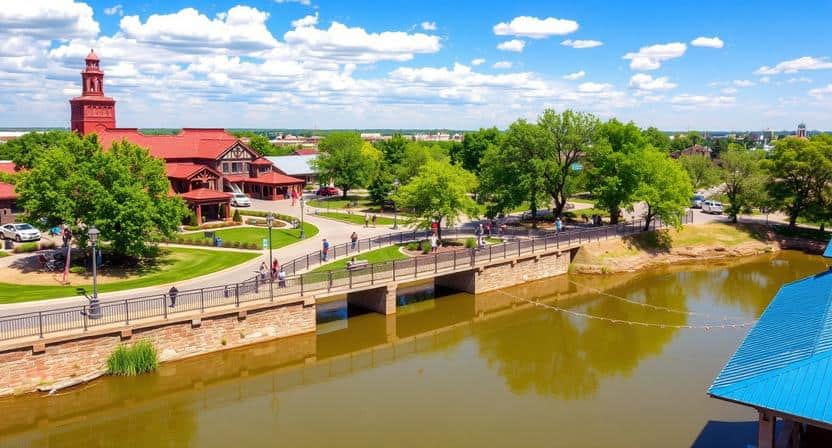
The tourism industry in Oklahoma had a significant effect on the economy in 2025 with total visitor spending estimated at $12.8 billion. There was a total of 50 million tourists in the state in which the tourism economy was distributed across 77 counties within the state.
This clearly indicates the significance of tourism in the domestic travel economy of the United States. There was an increase in visitor spending by 2.4% compared to the previous year owing to the hosting of major sporting events including the NBA Finals and the Women’s College World Series.
Advertisement
Advertisement
Major Sporting Events and Festivals Drive Visitor Demand
A key driver of Oklahoma’s tourism growth in 2025 was the hosting of high-profile national events. The NBA Finals celebrations and championship parade generated significant inflows of domestic visitors, boosting hotel occupancy, retail spending, and transport activity.
The Women’s College World Series also played a major role, continuing its position as one of the state’s most important recurring tourism assets. Alongside sports tourism, a wide range of festivals, cultural events, and seasonal celebrations helped sustain visitor demand throughout the year. These events collectively contributed to a steady rise in short-term travel, reinforcing Oklahoma’s position as a growing hub for event-based tourism in the U.S. domestic travel economy.
Advertisement
Advertisement
Statewide Distribution Strengthens Local Economies
Unlike destinations where tourism is concentrated in a single metropolitan hub, Oklahoma’s visitor economy is widely distributed across its 77 counties. This structure allows both urban and rural communities to benefit from tourism-driven spending. Local businesses—including hotels, restaurants, entertainment venues, and transportation providers—experience direct economic gains during major event periods. This decentralised tourism model supports regional economic resilience, reducing reliance on single-city tourism flows and strengthening statewide development.
Sports Tourism Becomes a Core Economic Strategy
The 2025 data reinforces the growing importance of sports tourism as a strategic economic driver. Large-scale events such as the NBA Finals and collegiate championships attract out-of-state visitors who typically spend more per trip than average leisure travellers. This segment of tourism is increasingly viewed by U.S. states as a reliable tool for economic development, offering predictable spikes in visitor demand and strong media exposure. As competition increases for hosting rights, states are investing heavily in sports infrastructure, arena upgrades, and event marketing strategies.
Advertisement
Advertisement
Expanding Role of Festival and Cultural Tourism
Beyond sports, Oklahoma’s tourism performance is supported by a growing calendar of cultural festivals and community events. These activities help extend visitor stays, diversify tourism offerings, and encourage repeat visitation. Festival tourism also contributes to destination branding by showcasing local identity, arts, cuisine, and heritage. This blend of cultural and entertainment programming is increasingly central to how U.S. states structure their tourism growth strategies.
Future Tourism Sector Impact: Shift Toward Experience-Led Travel
Oklahoma’s tourism expansion reflects a broader structural shift in the U.S. travel economy toward experience-led tourism models. Instead of relying solely on traditional sightseeing, destinations are increasingly focusing on:
• sports and entertainment events
• cultural festivals and heritage programming
• immersive regional travel experiences
• year-round destination activation strategies
This shift is expected to continue shaping tourism investment decisions, particularly in infrastructure development and destination marketing.
Other U.S. States Expanding Tourism Growth Strategies
While Oklahoma has recorded strong tourism performance, several other U.S. states are also aggressively expanding their tourism sectors through targeted investment and strategic branding. Five notable examples include Texas, Florida, California, Tennessee, and Nevada, each pursuing distinct growth models.
Texas: Scaling Sports, Culture, and Mega-Event Tourism
Texas continues to position itself as a national leader in tourism expansion, driven by major cities like Dallas, Houston, and Austin. The state benefits from a strong pipeline of sports events, music festivals, and business tourism, including NFL, NBA, and college sports markets. Texas is also investing heavily in convention tourism and large-scale entertainment infrastructure, aiming to attract international visitors and increase overnight stays. Its diversified economy supports both leisure and corporate travel growth.
Florida: Global Leisure Tourism and Theme Park Expansion
Florida remains one of the most visited states in the United States, anchored by its global reputation for beach tourism, theme parks, and cruise connectivity. Orlando and Miami continue to drive international arrivals, while regional destinations expand eco-tourism and cultural offerings. The state’s tourism strategy focuses on strengthening global connectivity, cruise port expansion, and year-round leisure travel demand, making it a key benchmark for international tourism competitiveness.
Advertisement
Advertisement
California: Film, Culture, and Coastal Tourism Leadership
California continues to lead in cultural, entertainment, and luxury tourism, driven by destinations such as Los Angeles, San Francisco, and San Diego. The state benefits from strong international branding tied to Hollywood, tech hubs, and coastal experiences. Tourism growth is increasingly supported by event tourism, film industry attractions, and experiential travel offerings, alongside strong domestic and international visitor demand.
Tennessee: Music-Led Tourism Expansion
Tennessee has emerged as one of the fastest-growing tourism markets in the U.S., driven by music tourism in Nashville and Memphis. Live entertainment, cultural heritage, and festival programming play a central role in attracting visitors. The state’s tourism strategy focuses heavily on music-driven destination branding, combining nightlife, cultural experiences, and event tourism to sustain year-round demand.
Nevada: Entertainment Capital and Event Tourism Hub
Nevada, led by Las Vegas, continues to dominate the entertainment and event tourism sector. The state attracts millions of visitors annually through conventions, concerts, sporting events, and gaming tourism. Las Vegas in particular is expanding into sports tourism and mega-events, including professional leagues and global entertainment residencies, strengthening its position as a diversified tourism destination.
Comparative Outlook: U.S. Tourism Competition Intensifies
Across these states, a clear pattern is emerging: U.S. tourism growth is increasingly driven by event-based, entertainment-led, and experience-focused travel strategies. States are competing not only for visitors but for major events that generate long-term economic impact. Infrastructure investment, destination branding, and partnership with sports leagues and entertainment industries are becoming central to tourism development strategies nationwide.

Future Tourism Growth: Event Economy as a National Driver
Looking ahead, the U.S. tourism sector is expected to increasingly rely on the event economy as a primary growth engine. Key drivers include:
• expansion of professional sports leagues and stadium infrastructure
• increased demand for live entertainment and festivals
• growth in regional and domestic travel post-pandemic
• integration of tourism with city branding strategies
As states continue to compete for visibility and visitor spending, tourism is evolving into a core economic development tool rather than a seasonal industry.
Advertisement
Advertisement
Long-Term Outlook: Diversified, Experience-Driven Tourism Economy
The $12.8 billion performance of Oklahoma Tourism industry is an indication of wider changes occurring at the national level within tourism. Together with the strong tourism growth strategy in Texas, Florida, California, Tennessee, and Nevada, a clear change is emerging within the United States, one that favors the creation of diversified and experience-based tourism economy.
Tourism growth will require in the future a combination of sports, cultural, entertainment and destination activities together with infrastructural investments and hosting events. Success in Oklahoma tourism demonstrates the potential for mid-size states to thrive in this changing world through major events, while large states can grow their international tourism brand names. Together, these trends indicate a future where tourism is an integral part of economic and national strategy in the United States.
Advertisement
